The Trolley Lean Tell: What Your Saturday B&Q Circuit Really Says About Your Engine
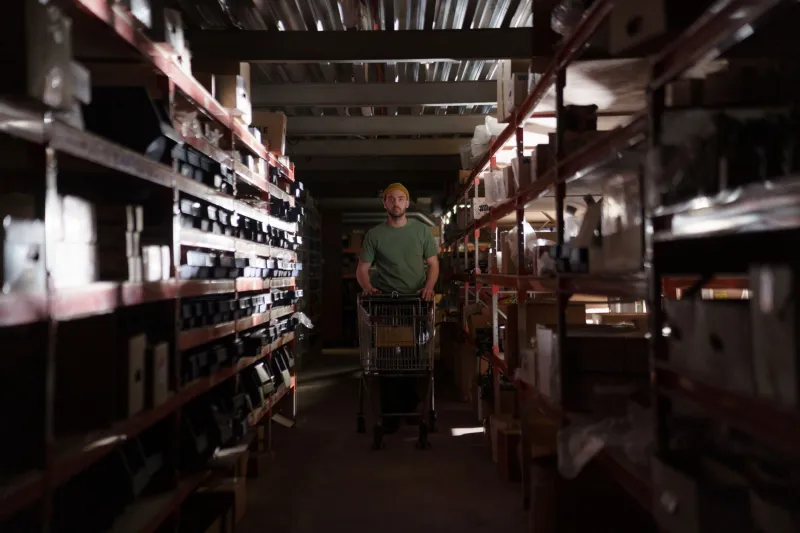
Saturday morning in B&Q is one of Britain's great accidental fitness tests. You don't sign up for it. You don't wear the right shoes. You go in for a pack of rawl plugs and come out having walked the length of a small airport, stood in a queue behind a man buying four fence panels, and climbed the stairs to the kitchen display twice because apparently the first look wasn't enough.
That wander is more revealing than most men realise. Not because B&Q is a medical centre — it isn't — but because the way you move through a big shop on a normal Saturday says a lot about your heart, hips and everyday stamina. And the clues are usually small: the trolley lean, the slowed pace by the timber aisle, the little breather by the paint mixer.
The aisle pace is the tell
Watch yourself on a normal B&Q run. Are you striding past the seasonal aisle with the same easy pace you had five years ago, or are you doing that slightly careful shuffle that says your hips would rather be in the car? Do you overtake the couple with the pram, or do they overtake you somewhere between lighting and garden furniture?
A one-off slow Saturday means nothing. You might have had a late night, a heavy week or a dodgy knee. But if the same pace feels harder month after month, that's a pattern worth noticing. Cardiovascular fitness isn't just about running 10K. It's about having enough reserve to walk, carry, climb and keep going without needing to negotiate with your body at every turn.
The trolley lean
There's a difference between steering a trolley and leaning on it like a walking frame. If you find yourself resting your forearms on the handle, pushing it more than guiding it, or using it to take the weight off your legs, that's a quiet signal. It can point to tired legs, stiff hips, poor balance or simply a lack of everyday movement.
Hips are a good example. Men often lose range in the hips gradually, without drama. You don't wake up one morning unable to move. You just start taking shorter steps, turning more cautiously, or avoiding the lower shelf because getting back up feels like a project. B&Q is full of low shelves. It's also full of opportunities to notice.
The stairs to the kitchen display
Those stairs are a brilliant little test. Not a stress test, not a diagnosis, just a moment of truth. Can you climb them at a normal pace and hold a conversation at the top? Or do you arrive on the kitchen floor pretending to be fascinated by worktops while your breathing catches up?
If stairs make you puff more than they used to, don't panic. But don't ignore it either. Breathlessness on exertion can be down to fitness, weight, smoking, poor sleep or something that needs a GP's eye. The point is not to self-diagnose from a Saturday morning. The point is to stop calling every decline 'just age' and start asking what your body is asking for.
The paint mixer breather
Standing still shouldn't feel like recovery. If you need a minute by the paint mixer after a relatively gentle wander, that's worth a second thought. It could be dehydration, a poor night's sleep, low fitness, or the fact you've been running on coffee and a cereal bar since 7am. It could also be circulation doing a less efficient job than it should.
Circulation matters here because it's how oxygen and nutrients get around the body. You don't need to be a physiologist to understand the practical version: cold hands, heavy legs, sluggish afternoons and a feeling that your engine is running rich but not firing cleanly. For men, that can show up in energy, exercise tolerance and confidence. It's not all about the gym. It's about the ordinary stuff — the shop, the stairs, the garden, the school run.
What the B&Q walk test is really checking
It's checking your reserve. Anyone can do a short burst when motivated. The question is whether your everyday body has enough left in the tank for the unglamorous bits of life. The B&Q circuit is brilliant because it's boring. It's not a workout. It's just walking, standing, bending, reaching and climbing — the same things you do at home, at work and on holiday.
If those things are getting harder, the answer isn't to avoid B&Q. It's to rebuild the basics. Walk more. Take the stairs when you can. Do a few hip openers in the kitchen while the kettle boils. Carry the shopping in two trips instead of pretending one is efficient. Get your sleep sorted. Drink water before you feel thirsty. And if you're a man over 35 who wants a bit of daily support for energy and circulation, a supplement like Manhood Plus Gummies can sit alongside those habits — not replace them.
A simple Saturday standard
Next time you're in B&Q, run a quiet check. Can you walk the aisles at a normal pace? Can you climb the stairs without needing a minute? Can you bend to the bottom shelf and get back up without using the trolley as a crutch? Can you do it again next Saturday without dread?
If the answer is yes, brilliant. Keep moving. If the answer is no, don't turn it into a crisis or a joke. Turn it into information. Start small, build consistency and get checked if something feels off — especially chest pain, unusual breathlessness, dizziness or a sudden change in how you move.
Your body is usually polite about these things at first. It whispers through the trolley handle. The trick is to listen before it has to shout.